

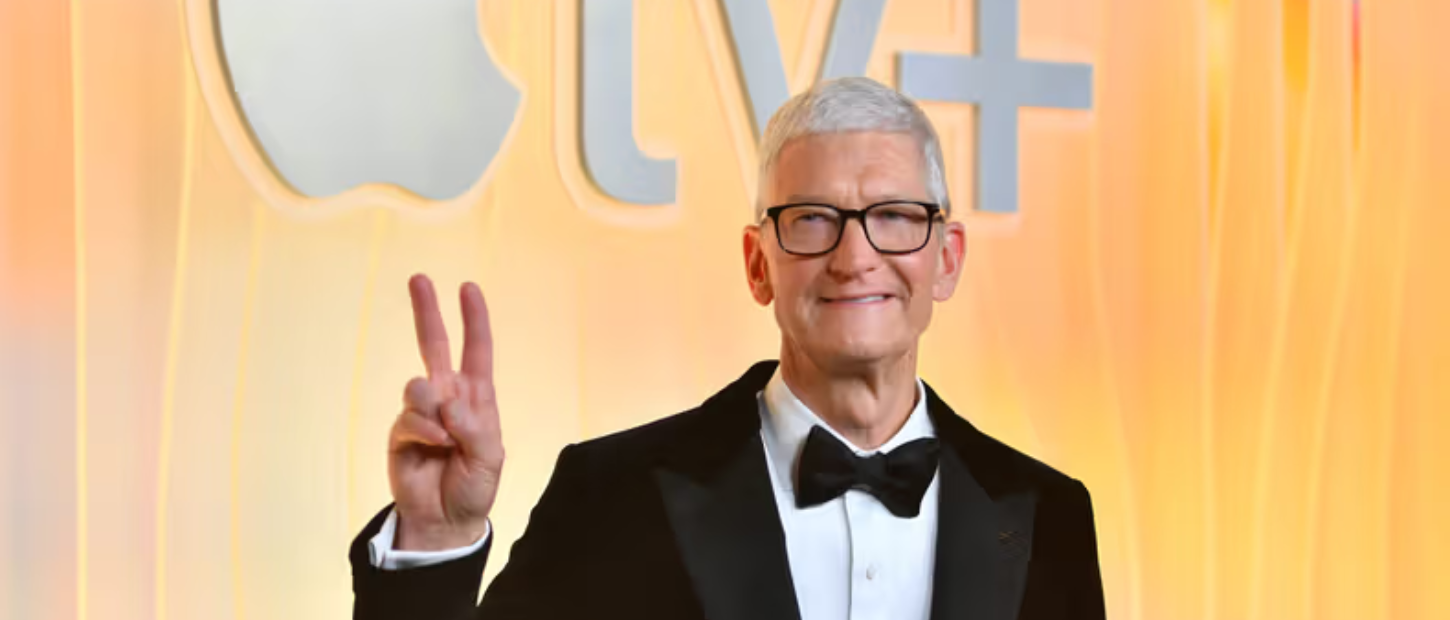
Apple Inc. has officially announced that Tim Cook will step down as chief executive officer on September 1, 2026, marking the end of a remarkable 15-year run at the helm of the tech giant. Cook will remain with the company as executive chairman, ensuring continuity during the transition.
Taking over as CEO is John Ternus, Apple’s senior vice president of hardware engineering and a long-anticipated successor. As part of the leadership reshuffle, Johny Srouji has also been named chief hardware officer.

Cook’s journey with Apple spans nearly three decades. He joined the company in 1998 as senior vice president of worldwide operations, before being appointed chief operating officer in 2005 by Apple co-founder Steve Jobs. Known for building one of the most efficient supply chains in the world, Cook played a critical role in scaling Apple’s global operations before stepping into the CEO role in 2011 following Jobs’ passing.
Reflecting on his tenure, Cook described the experience as “the greatest privilege of my life,” expressing deep gratitude for the team he worked with and their shared mission of creating innovative products that enrich customers’ lives.
Under Cook’s leadership, Apple reached unprecedented milestones. In 2018, it became the first publicly traded company to hit a $1 trillion valuation, and it has since grown to a market capitalization exceeding $4 trillion. While the iPhone remained Apple’s flagship product, Cook oversaw the successful launch of other major products such as the Apple Watch and AirPods, both of which have become household names.
He also expanded Apple’s footprint in China, turning it into one of the company’s most important markets. At the same time, he transformed Apple’s services division, growing offerings like the App Store, iCloud, and Apple TV into a business generating over $100 billion annually with strong profit margins.
In 2014, Cook made history as the first openly gay CEO of a Fortune 500 company, describing his sexuality as one of the greatest gifts in his life and a source of resilience in leading one of the world’s most scrutinized companies.
Despite these successes, his tenure was not without challenges. Early missteps included the widely criticized 2012 launch of Apple Maps, which has since improved significantly. More recently, Apple faced mixed reactions to the high-priced Apple Vision Pro headset, and delays in rolling out advanced AI features for Siri. The company also abandoned its long-running self-driving car initiative, known internally as Project Titan, after investing billions of dollars.
Cook’s departure comes at a pivotal moment, as Apple works to close the gap with competitors in the rapidly evolving artificial intelligence space—an area where it was slower to invest.
Ternus will assume the CEO role later this year, around the anticipated launch of the iPhone 18, which is expected to debut alongside a significantly upgraded, AI-powered version of Siri.
