

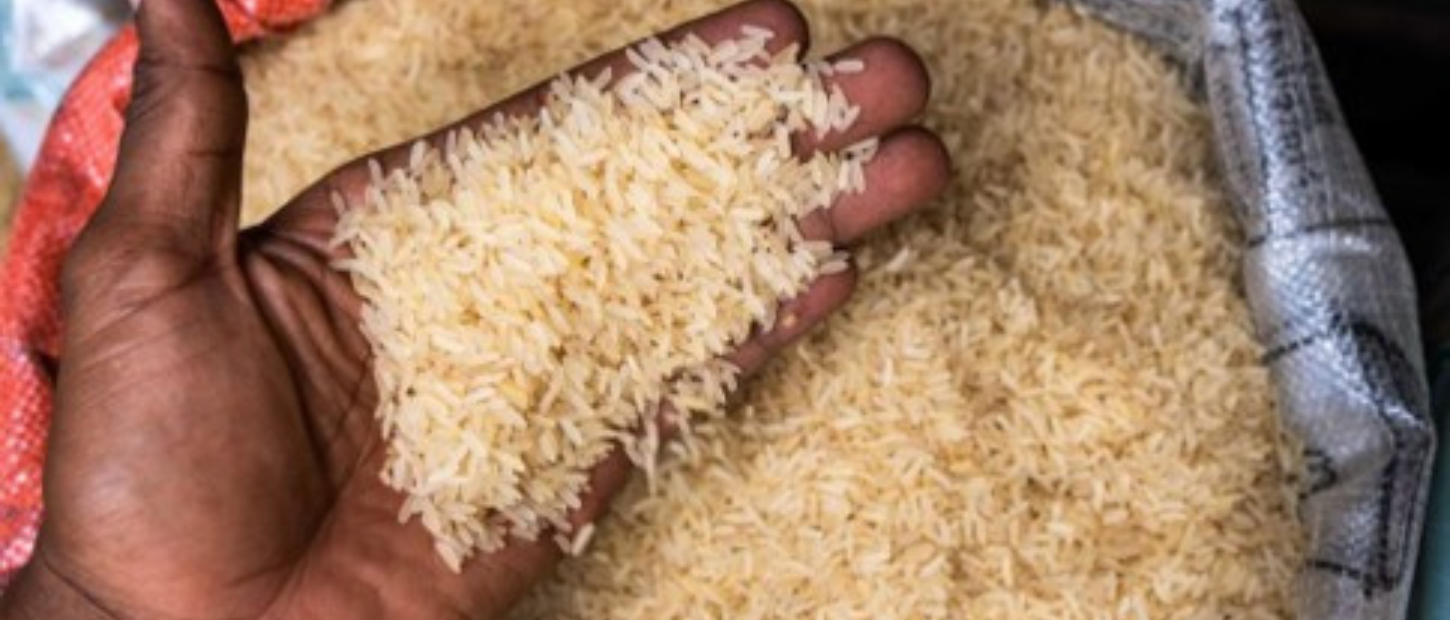
Rice cannot be the solution for every problem. At this point, Nigerians deserve honest answers.
Because how did we get to a place where school children and their teachers are kidnapped, families are thrown into fear and uncertainty, and the response that dominates headlines is the distribution of rice?
Rice.
Not a detailed rescue strategy, comprehensive security briefing or even visible action against criminal networks.
Rice.
Somewhere along the line, rice stopped being food and became a public relations tool. There seems to be a growing belief among political leaders that every crisis can be softened with a few bags of grain and a photo opportunity.
People are hungry, yes. Nobody is denying the economic hardship many Nigerians face. But hunger is not the only problem confronting the country.
When children are abducted on their way to school, the immediate concern is safety. Parents want to know whether their children will return home alive. Communities want assurance that the same thing will not happen again. Citizens want to see governments mobilize every available resource to protect lives.
What they do not want is a distraction.
The recent kidnapping of teachers and school children in Oyo State should have sparked an intense conversation about security, intelligence gathering, school safety, and the growing boldness of criminal elements. Instead, many Nigerians were left wondering why rice appeared to be receiving almost as much attention as the victims themselves.
It raises an uncomfortable question: have we become so accustomed to symbolic gestures that we now mistake them for solutions?
Rice cannot patrol highways.
Rice cannot rescue kidnapped children.
Rice cannot dismantle kidnapping gangs.
Rice cannot make parents sleep peacefully after hearing that armed men have invaded a school.
For years, Nigerians have been told that security is a priority. Yet kidnappings continue to occur with alarming regularity. Communities live in fear. Parents worry every time their children leave home. Teachers, farmers, travelers, and business owners all face risks that should never be normal in any functioning society.
The frustration many people feel is not really about rice. It is about priorities.
It is about the perception that governments often respond more quickly to optics than to the root causes of crises. It is about citizens who are tired of temporary relief being presented as long-term solutions.
Nigerians are angry because they know that while a bag of rice may feed a family for a few days, insecurity can destroy lives forever.
And perhaps that is the real question leaders should be asking themselves:
When people are being kidnapped, should citizens be thanking government officials for rice, or demanding answers about why they were not protected in the first place?
Because until security becomes more important than symbolism, many Nigerians will continue to feel that those in power are addressing the symptoms while ignoring the disease.
