

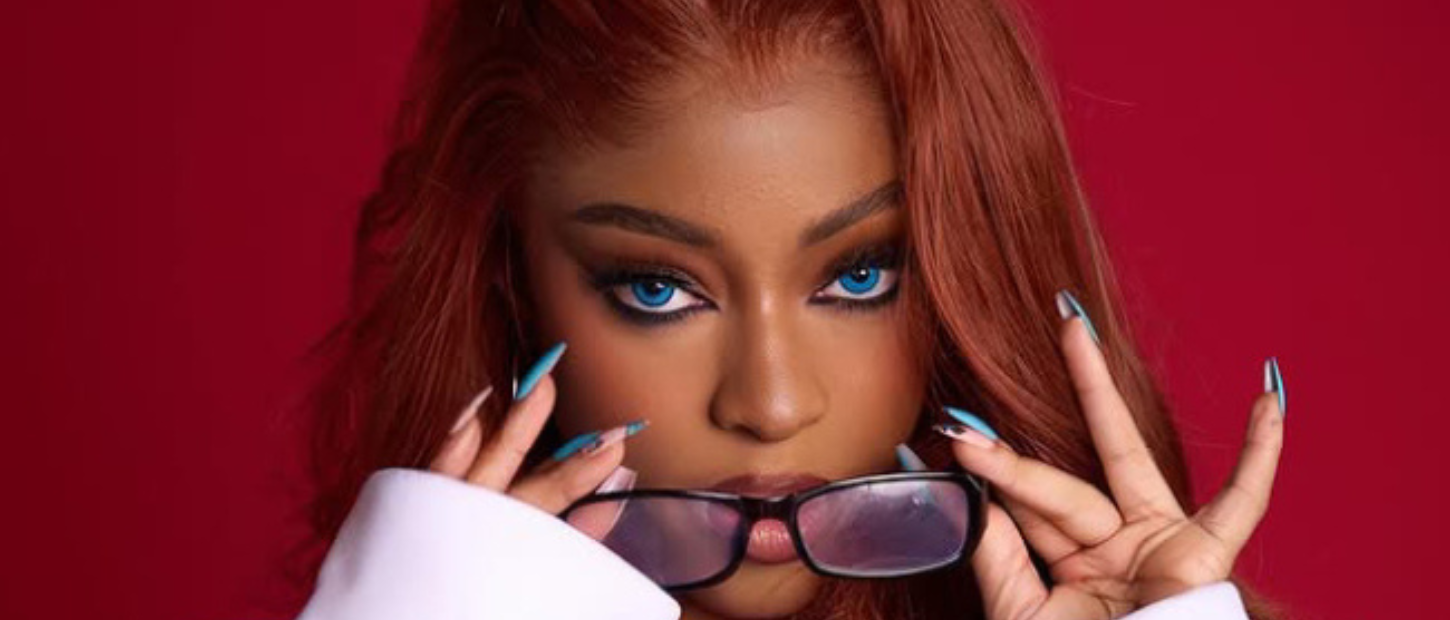
Qing Madi’s recent dispute with her former label manager, Joy Tongo, is another reminder of how fragile artist protection still is in the Nigerian music industry.

The 19 year old singer went on TikTok Live after several songs from her Barely Legal EP disappeared from Spotify, and she didn’t mince words. She accused Tongo of forgery, interference, and deliberately working against her career. In her frustration, she kept returning to one question: “How are you fighting with a kid?”
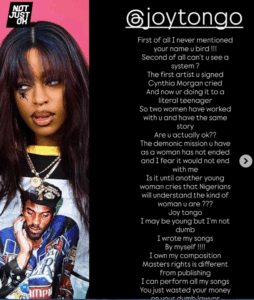
It’s a simple line, but it says a lot about how young artists experience the industry when disputes escalate. What often starts as passion quickly becomes contracts, control, and access. Things most emerging artists are barely prepared to navigate when they sign their first deals.
This is not the first time Qing Madi and her former label structure have clashed. She has previously spoken about a court case between both parties, which she claims she won, and also says she had to attend proceedings with her mother because she was still underage at the time.
Joy Tongo, however, has denied the new allegations. She insists the issues between them are still unresolved and has pushed back on parts of Qing Madi’s public account, including claims about court outcomes and the reason behind the Spotify removals.
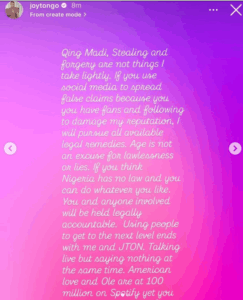
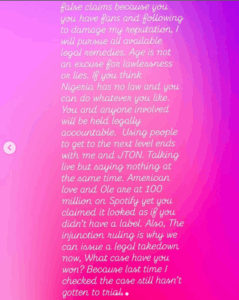
So at this point, there are two versions of the same story, and neither fully cancels the other out in the public space. The music is caught in the middle.
Beyond the back-and-forth, what stands out is how familiar this pattern is becoming. Songs disappear from streaming platforms. Artists go online to explain themselves. Former management teams respond with legal language and the music — the thing everyone is supposed to be protecting — becomes collateral.
In Qing Madi’s case, it also raises a harder question about age and power. She is 19, still very early in her career, yet already dealing with legal disputes, ownership arguments, and public explanations about her catalogue. That is not unique to her, but it is still concerning.
When young artists enter the industry without strong protection or clear understanding of ownership structures, situations like this become easier to repeat than to resolve.
For now, Barely Legal remains partially affected on Spotify, and the disagreement between both sides is still ongoing.
