

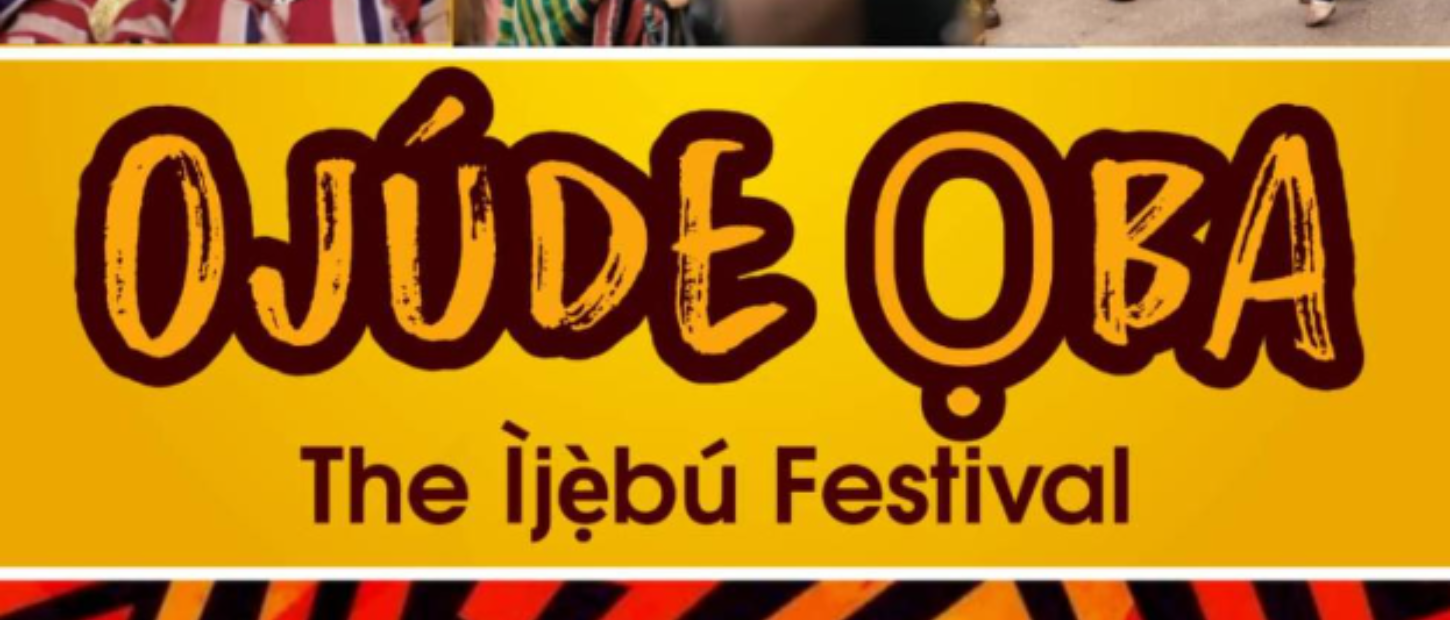
Every year, when images from Ojude Oba flood social media timelines, the first thing people usually notice is the fashion.
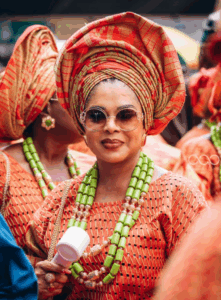
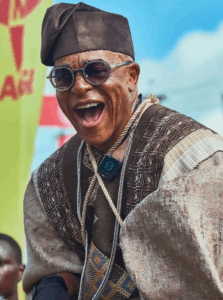
The coordinated aso-oke. The richly embroidered agbadas. The towering geles. The coral beads. The luxury sunglasses. The near-perfect colour combinations.
To many people watching from a distance, it looks like a grand fashion parade. But Ojude Oba fashion is far more layered than aesthetics alone.
At Ojude Oba, clothing is not just about looking good. It is about identity, unity, status, heritage, and collective pride.
That is what makes the festival different.
Held annually in honour of the Awujale of Ijebuland, Ojude Oba has become one of the most visually celebrated cultural festivals in Africa. But beyond the glamour that dominates online conversations every year lies a deeply intentional culture of presentation that has existed for generations.
At the centre of this visual identity are the regberegbe groups.
These age-grade associations form one of the most important parts of the festival, and fashion is one of the ways they express who they are collectively. Every regberegbe appears in coordinated outfits that are often designed months before the festival itself. Fabrics are carefully selected. Tailors are commissioned early. Accessories are planned down to the smallest detail.
Nothing is accidental.
What makes Ojude Oba fashion particularly fascinating is that it prioritises collective identity over individual expression. In most fashion spaces, people dress to stand out. At Ojude Oba, people dress to belong.
The goal is not for one person to look better than everyone else. The goal is for the entire group to move, appear, and present itself as one unified cultural statement.
Traditional Yoruba fabrics such as aso-oke, lace, adire, damask, and velvet often form the foundation of these looks. Some groups embrace heavy embroidery and elaborate layering, while others prefer cleaner tailoring and modern silhouettes. Yet despite these stylistic differences, coordination remains the defining principle.
For men, agbadas are often tailored with exaggerated structure to create presence and uniformity within the group. Matching fila caps reinforce alignment and hierarchy. For women, gele, ipele, jewellery, handbags, and coordinated accessories all contribute to a shared visual identity that immediately distinguishes one regberegbe from another.
At Ojude Oba, fashion becomes organised communication.
Even the colours chosen by groups can carry symbolic meaning, reflecting prestige, confidence, elegance, or cultural pride. In many cases, the way a group presents itself visually says a lot about its organisation, planning, and social cohesion.
There is also the competitive aspect.
Every year, regberegbe groups attempt to outdo one another through styling, creativity, coordination, and presentation. It is a competition that has quietly elevated Ojude Oba into one of the biggest showcases of indigenous African fashion anywhere in the world.
But beyond the fashion statements and viral photographs, something more important is happening.
Ojude Oba proves that traditional fashion can remain culturally authentic while still feeling modern, aspirational, and globally relevant. The festival has managed to preserve Yoruba identity without making culture feel outdated or performative.
And perhaps that is why the fashion resonates so strongly online.
People are not just responding to beautiful clothing. They are responding to confidence in identity. They are seeing a community present itself proudly without seeking validation from outside its culture.
In a time where many cultural expressions are becoming diluted by trends and internet aesthetics, Ojude Oba continues to stand out because its fashion still carries meaning.
It is not costume.
It is heritage worn proudly in public.
That is what makes Ojude Oba fashion unforgettable.
