

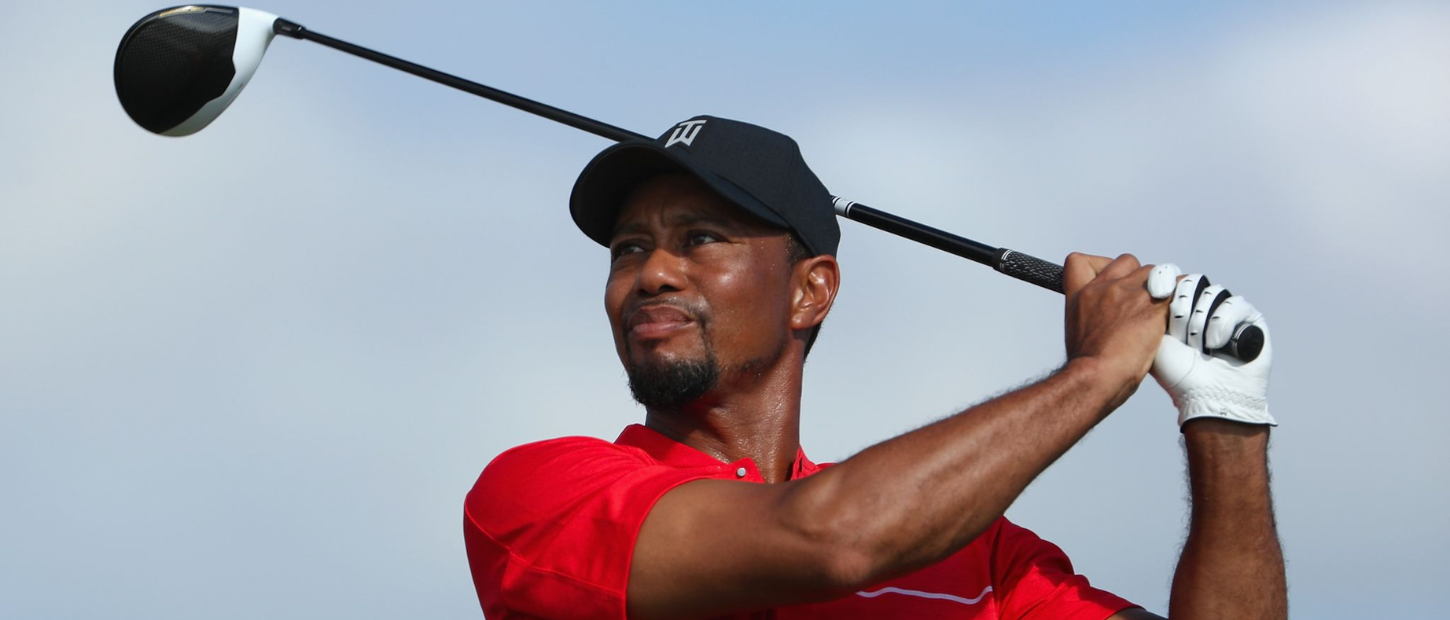
When the name Tiger Woods trends, it’s usually tied to greatness. Records. Comebacks. Moments that remind the world why he’s one of golf’s most iconic figures.

But this time, it’s different.
On Friday afternoon, March 27, 2026, Woods was arrested and briefly jailed on charges of driving under the influence following a two-car crash near his home in Jupiter Island, Florida. And while the incident itself is alarming, what makes it even more unsettling is how familiar it all feels.
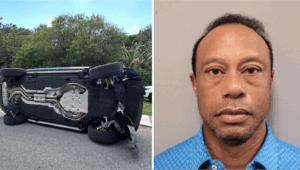
According to authorities, the crash happened just before 2 p.m. on South Beach Road, a narrow two-lane stretch with a 30 mph speed limit. A pickup truck pulling a pressure-cleaning trailer was attempting to turn left when Woods, driving a Land Rover, tried to overtake it at high speed.
The truck driver reportedly noticed Woods approaching from behind and attempted to move aside, but there was no shoulder to escape to.
Seconds later, impact.
Woods clipped the back of the trailer, and his vehicle flipped, rolling toward the driver’s side before sliding up the road. It’s the kind of accident that often ends in tragedy.
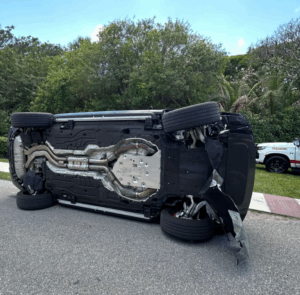
But somehow, Woods crawled out of the passenger side alive.
No life-threatening injuries. No immediate signs of physical trauma. Just another narrow escape.
And yet, that’s where the real story begins.
At the scene, officers observed that Woods appeared lethargic. Not fully alert. Not quite himself. A breathalyzer test showed 0.00, ruling out alcohol completely.
But when asked to take a urinalysis test, Woods refused.
That refusal triggered charges. DUI with property damage. Refusal to submit to a lawful test. Both misdemeanors, yes, but serious enough to reopen conversations many thought had long been settled.
Because this isn’t just about one crash.
It’s about a pattern.
Since 2009, Tiger Woods has been involved in multiple high-profile automobile incidents, each one adding another layer to a complicated public narrative.
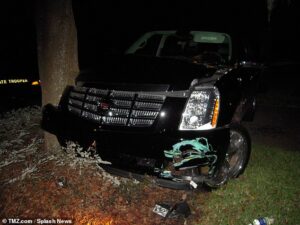
The first came in November 2009, when he crashed into a fire hydrant and a tree outside his Florida home in the early hours of the morning. What followed wasn’t just a traffic citation, but the unraveling of a carefully built image. Reports of infidelity surfaced, leading to public apologies, a break from golf, and eventually, the end of his marriage to Elin Nordegren.
Then came 2017.
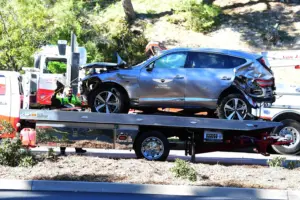
Woods was found asleep behind the wheel of his car at 3 a.m., engine still running, stopped in the middle of the road. Once again, his breathalyzer read 0.00. But this time, he later admitted to an “unexpected reaction” to a mix of prescription drugs, including pain medication and sleep aids. He pleaded guilty to reckless driving and completed a DUI diversion program.
In 2021, the stakes were even higher.
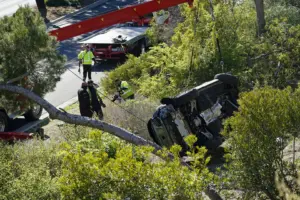
Woods was involved in a near-fatal crash in Los Angeles, speeding at over 80 mph on a winding road. Investigators later said there were no signs of impairment, but the consequences were devastating. His vehicle crossed a median, struck a tree, and flipped into brush. He suffered severe injuries, including damage to his right leg and ankle so extensive that amputation was considered.
“I’m lucky to be alive and also have a limb,” he said months later.
That crash was supposed to be a turning point. A moment of reflection. A reset.
Instead, five years later, we are here again.
Another crash. Another investigation. Another wave of concern.
What makes this latest incident particularly troubling is the context. Woods has spent years battling through surgeries, rehabilitation, and repeated attempts at a comeback. Multiple back procedures. Ankle fusion. A ruptured Achilles tendon. The physical toll alone is staggering.
And yet, just days before this crash, he had made a public appearance swinging a golf club, hinting at yet another return. The 2026 Masters loomed ahead, with fans quietly hoping to see him compete again, even if just symbolically.
Now, that hope feels uncertain.
Because beyond the legal implications, this moment forces a harder question. Not about his golf, but about his well-being.
How many more close calls does it take before the conversation shifts from comeback to concern?
Tiger Woods has built a career on resilience. Time and again, he has fallen, only to rise in ways that seemed almost impossible. But resilience doesn’t mean invincibility.
At some point, the pattern becomes impossible to ignore.
This latest crash may not define his legacy. Few athletes have earned the kind of grace he has through sheer excellence. But it does add another chapter to a story that is becoming increasingly difficult to separate from the man himself.
And maybe that’s the real issue.
Because at this stage, it’s no longer just about what happens on the course.
It’s about what keeps happening off it.
