

Are you people even serious right now?
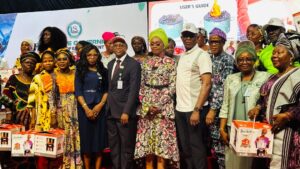
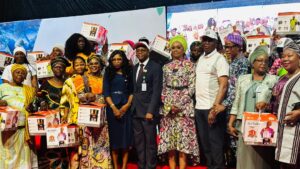
Ogun State says it is fighting climate change by distributing 3,500 clean cookstoves to residents. Whats the goal? Apparently, its to reduce the dependence on firewood and charcoal, protect forests, cut pollution, and promote cleaner energy.
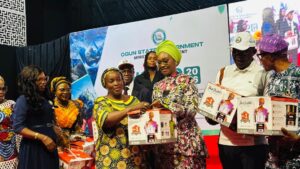

An absolutely beautiful idea i must say, a very important conversation but then reality enters the room. 3,500 stoves, asin, three thousand five hundred kerosene stoves, would have been nicer if these stoves were supported with kegs of kerosene.
For a state with millions of residents.

That is the part where many Nigerians will understandably pause and ask: is this a solution or just a headline?
Because the truth is, the problem is not that Nigerians do not know firewood and charcoal have consequences. Nobody wakes up and says, “Today, I want to contribute to deforestation.”

People use what they have access to. For many families, firewood and charcoal are not lifestyle choices. They are survival options, they are what happens when cleaner alternatives are either too expensive, unavailable, or unreliable.
So giving out clean cookstoves is a good step, but the bigger question is: what happens after the cameras leave?

Who ensures these stoves reach the communities that need them the most?
Who ensures they are maintained?
Who ensures families are not forced back to firewood when clean energy options become too costly?
Because climate action cannot just be about distributing items. It has to be about building a system.
Nigeria has spent years talking about environmental challenges: flooding, deforestation, waste management, air pollution. We have planted trees, launched campaigns, held conferences, and made promises.


But our biggest environmental problem has always been one thing: scale.
A few thousand stoves cannot compete with millions of households.
A few environmental campaigns cannot compete with daily struggles for survival.
The introduction of Refuse Derived Fuel (RDF) is actually the kind of innovation Nigeria should be paying more attention to. Turning waste into fuel could help tackle two major problems at once: overflowing waste dumps and dependence on traditional energy sources.
But ideas only become powerful when they move beyond conference halls and become part of everyday Nigerian life.
The environment does not need another speech. It needs commitment.
It needs affordable clean energy.
It needs proper waste systems.
It needs policies that work not just for people who can afford alternatives, but for the average Nigerian household.
So yes, 3,500 clean cookstoves matter.
But let’s not pretend it is the finish line.
It is barely the starting point.
Because climate change is a crisis of millions, and it will take more than thousands to fix it.