

For years, Blessing CEO has mastered the art of staying at the centre of conversations.
From relationship advice, celebrity call-outs, luxury lifestyle displays, viral interviews and controversial opinions, the social media personality built a brand around one thing: attention. Whether people loved her or criticized her, they watched.
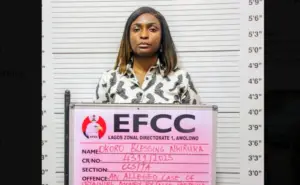

But now, the same spotlight that built her empire is shining on a very different stage: the courtroom.
The Federal Government, through the Economic and Financial Crimes Commission (EFCC), has arraigned Blessing CEO for the second time within months, deepening the legal troubles surrounding the influencer.
The first case began with allegations of a ₦36 million property fraud. The EFCC accused her of collecting money from a woman under the claim that she could facilitate the lease of a six-bedroom duplex in Lekki, despite allegedly not having the authority to do so.
Blessing CEO pleaded not guilty to the charges, while her legal team stated that part of the money had been refunded. However, the matter continued, with prosecutors maintaining that the case had moved beyond a private dispute and had become a matter involving the state.
Then came another legal battle.
This time, the EFCC filed a fresh case involving an alleged ₦69.1 million fraud. The new charge added another layer to the conversation around one of Nigeria’s most talked-about internet personalities.
But beyond the court documents and allegations lies a bigger conversation about the influencer economy and the power of online personalities.
The Cancer Fundraising Controversy That Changed the Conversation
Before the recent arraignments, Blessing CEO was already facing public scrutiny over another controversy involving a cancer fundraising campaign.
The situation involved Deborah Mbara, whose cancer story reportedly attracted public sympathy and donations. As Nigerians rallied around the cause, questions later emerged online over the authenticity of some claims surrounding the fundraising effort.
Reports stated that a petition was submitted to the EFCC alleging issues around medical documents and funds connected to the campaign.
The controversy triggered intense debate.
For many Nigerians, the issue was bigger than one individual. It touched on something deeply sensitive: the trust people place in online personalities when they are asked to support vulnerable people.
When influencers use their platforms to amplify causes, they often become the bridge between public generosity and those in need. That bridge is built on trust, and once questions emerge, the damage goes beyond the personalities involved.
However, it is important to note that the cancer fundraising controversy and the EFCC property fraud case are separate matters.
Blessing CEO’s journey reflects the complicated relationship Nigeria has with internet fame.
The same qualities that make someone go viral, confident, fearless, controversial and give them constant visibility can also make them attract intense public attention when things go wrong.
For years, she has positioned herself as someone who says what others will not say. She built a following by challenging narratives and refusing to stay quiet.
But influence comes with responsibility.
The internet remembers everything. Every statement, every claim, every public battle and every endorsement becomes part of a permanent record.
The Blessing CEO saga is no longer just about a social media personality. It has become a conversation about the future of online fame in Nigeria.
How much accountability should influencers carry when they become trusted voices?
Where do we draw the line between building a controversial brand and crossing into questionable territory?
And most importantly, as more Nigerians build careers from digital influence, should the rules around online responsibility become stricter?
For now, Blessing CEO’s story continues to unfold, but one thing is clear: the courtroom may be the biggest stage she has ever stepped on.