

There is something fascinating about the Nigerian internet.
A statement can be made in Lagos by 10 a.m., interpreted differently in Abuja by noon, exaggerated on social media by 2 p.m., and by evening, people are arguing about something that was never actually said.
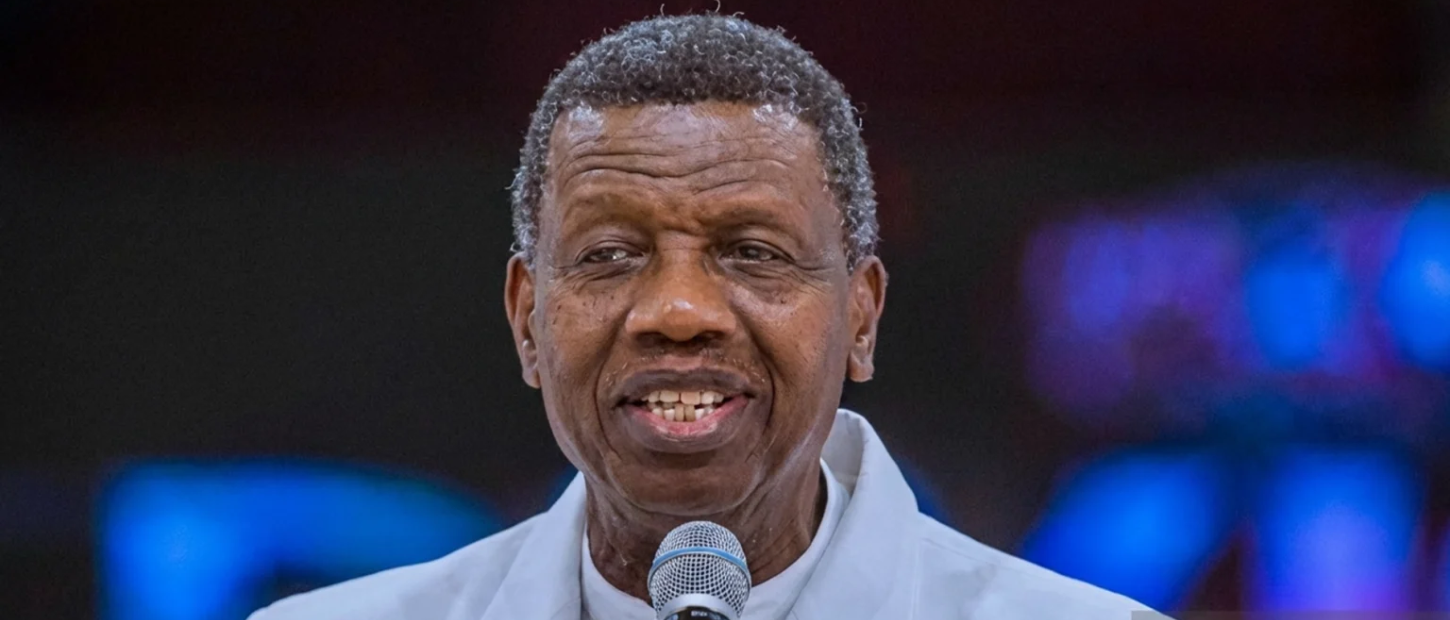
That seems to be exactly what happened with Pastor Enoch Adeboye.
Over the past few weeks, social media has been awash with claims that the General Overseer of the Redeemed Christian Church of God (RCCG) had either taken a political position, called off a planned protest, or chosen to remain silent on the challenges facing Nigeria.
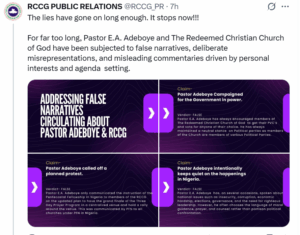
The conversations became so widespread that the church itself had to step in.
In a statement released through its official communication channels, RCCG essentially delivered a message many Nigerians need to hear more often: verify before you believe.
The church rejected claims that Pastor Adeboye had instructed anyone to abandon a protest movement. According to RCCG, what actually happened was far less dramatic. The cleric was merely communicating a directive from the Pentecostal Fellowship of Nigeria (PFN) regarding adjustments to a prayer programme.
But somewhere between that announcement and the internet’s ability to create its own version of reality, the narrative changed.
Suddenly, a routine organizational decision became a political controversy.
The church also addressed another recurring criticism: that Pastor Adeboye has remained silent while Nigerians grapple with insecurity, economic hardship, corruption, and governance challenges.
Whether one agrees with him or not, that accusation is difficult to sustain.
Over the years, Adeboye has repeatedly spoken about national issues. He has commented on insecurity. He has spoken about leadership. He has encouraged civic participation and consistently urged Nigerians to pray for the country.
The real issue appears to be that many people expect religious leaders to engage in politics the same way politicians do.
Pastor Adeboye rarely does that.
His approach has traditionally been rooted in moral guidance, spiritual counsel, and public prayers rather than direct political confrontation.
For some Nigerians, that approach is not enough.
For others, it is exactly what a religious leader should be doing.
But disagreement with someone’s style of engagement is not the same thing as silence.
Perhaps the most interesting part of RCCG’s statement is what it reveals about the current state of public discourse.
We are living in an era where assumptions often travel faster than facts.
A headline is shared without context.
A quote is reposted without verification.
A rumor is repeated so many times that it begins to feel true.
Before long, people are reacting to narratives rather than reality.
The church’s response is therefore bigger than Pastor Adeboye.
It is a reminder of how easily misinformation flourishes when emotions outrun verification.
Ironically, the RCCG statement may not completely stop the rumors. This is the internet after all.
But it does raise an important question:
When was the last time we checked whether a viral claim was actually true before sharing it?
Because sometimes the biggest story is not what a public figure said.
It is what everyone insists they said after the fact.
