

Nigerians have a way of turning the smallest thing into a full blown national debate. One moment, it is a harmless personal expression. The next, it is a spiritual trial by fire.
When Pastor Kingsley Okonkwo of David’s Christian Centre recently appeared with a tattoo on his arm, the internet reacted almost instantly. The tattoo, inscribed with John 3:16 in Roman numerals, should have been an easy detail to gloss over. Instead, it became the headline. Conversations quickly shifted from the scripture itself to whether a man of God should even have ink on his skin.
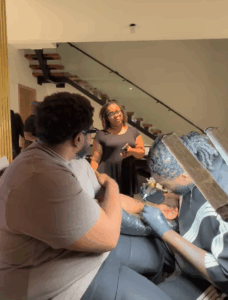

What made the reaction interesting was not the shock. It was the familiarity of it.
This is the same society that constantly praises foreign pastors with tattoos, piercings and dreadlocks. Their sermons trend online. Their clips are shared with captions about freedom, depth and spiritual authenticity. Their appearance is described as refreshing. But when that same expression shows up at home, especially on a pastor Nigerians can access and relate to, it suddenly becomes a problem.
Pastor Kingsley’s tattoo was not rebellious or random. It carried one of the most central messages in Christianity. Yet, many people were more concerned about the placement than the meaning. It was as if faith now had a strict aesthetic requirement.
This reaction is not new.
Pastor Jimmy Odukoya of The Fountain of Life has faced similar scrutiny for years. His piercings, tattoos and overall style have often drawn more attention than his message. Despite consistency in doctrine and impact, his appearance has repeatedly been used as a yardstick for spirituality. Same Bible. Same message. Different look. Louder outrage.
The contradiction is hard to ignore.
Nigerians seem more comfortable applauding faith when it comes wrapped in a foreign accent or an overseas church environment. From a distance, it feels progressive and inspiring. Up close, it suddenly feels uncomfortable. It challenges long held ideas of what a pastor should look like, and instead of adjusting those ideas, we choose to police the person.
But Christianity has never been about uniformity. There is no verse that links holiness to bare skin or forbids personal expression as a condition for grace. Yet, cultural expectations have quietly been elevated to spiritual standards.
If the message still points to Christ
If the doctrine remains sound
If the life still reflects faith
Then perhaps the conversation should shift.
Because when we celebrate men of God abroad for the same things we condemn at home, the issue is no longer tattoos or piercings. It is our discomfort with growth that does not fit into the boxes we created.
And maybe, just maybe, the ink is not the distraction.
Our double standards are.