

What looked like just another viral Lagos moment has now snowballed into a serious legal battle, and it says a lot about the thin line between content and consequences.
On January 6, 2026, at Folixxx Lounge, a late-night encounter between TikTok streamer Habeeb Hamzat (Peller) and Osarobo Osarenoma Odigie quickly spiraled from a simple misunderstanding into a viral controversy.
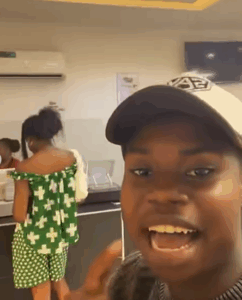

According to a pre-action letter from Odigie’s legal team, she was at the lounge to buy food when she was startled by a loud outburst behind her. In response, she reportedly moved away, a decision that allegedly triggered Peller.
What followed, as detailed by her lawyers, was a confrontation that turned aggressive. Peller allegedly demanded to know why she stepped aside and told her to “shut up.” When she asked him to be more moderate in a public setting, he reportedly responded with verbal insults, including derogatory Yoruba terms.
Now, here’s where things take a familiar but troubling turn.
Rather than de-escalate, Peller allegedly pulled out his phone, recorded the interaction without her consent, and shared the video across multiple platforms. With his large following, the clip spread rapidly, and with virality came commentary, mockery, and, according to the claimant, cyberbullying and threats.
In today’s creator economy, moments like this are often brushed off as “content.” But this case raises a bigger question. At what point does content cross into violation?
To his credit, Peller did issue a public apology on January 9, just days after the incident. In the video, he admitted his reaction was out of character and expressed regret over how he handled the situation. For many online, that might have seemed like the end of the matter.
But for Odigie, it clearly wasn’t enough.
In a pre-action notice dated March 10, her lawyers, led by Bola Osineye of FA Garrick & Co., outlined demands that go far beyond an apology. They insisted on the immediate takedown of the video, a formal public apology across all platforms and in national newspapers like The Punch and The Guardian, and compensation for damages.
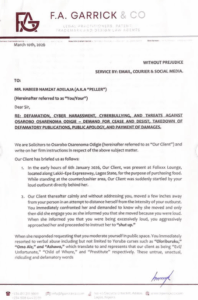
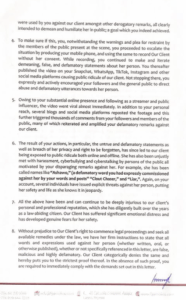


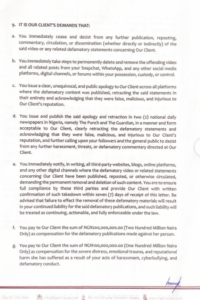
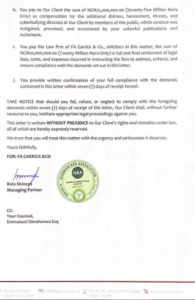


The numbers are staggering. ₦200 million for defamation, ₦100 million for emotional distress, ₦75 million for harassment, cyberbullying, and threats, and ₦20 million in legal costs, bringing the total to ₦395 million.
They also want Peller to actively ensure that third-party platforms and blogs take down the video.
This is where the story shifts from gossip to a cautionary tale.
Because beyond the specifics of who said what, this situation highlights a deeper issue in Nigeria’s digital space, the growing tension between clout and consent. The idea that anyone can be filmed, posted, and turned into viral content without permission is increasingly being challenged, not just socially, but legally.
And while public apologies may satisfy the internet, they don’t always resolve the real-world impact of virality, reputational damage, emotional distress, and, in some cases, safety concerns.
If this lawsuit proceeds, it could set an important tone for how creators operate moving forward. Because the message is becoming clearer, influence does not equal immunity.
What started as a moment at a lounge is now a potential landmark case on digital rights, privacy, and accountability in Nigeria’s creator economy.
And for creators everywhere, it’s a reminder. Not everything should be content.