

Guy, let me gist you because this thing is actually scary.
So yes, we already heard Adekunle Olopade’s story and it was upsetting, but in that way Nigerians are sadly used to. He spoke about being harassed by the police, treated like a criminal for no clear reason, and then subtly pushed to part with money just to be allowed to go his way, not a small amount, his entire savings, after he had already gotten beaten and left stranded.
Briefly, this is what Adekunle Olopade said happened that night:
According to him, he was stopped by Nigerian police officers during a routine stop with no clear offence against him. What started as questioning quickly turned into harassment. He said he was profiled, spoken to aggressively, and treated like a suspect simply because of how he looked and the kind of phone he was carrying.
There was no formal accusation, no explanation of any crime, just pressure and intimidation. Adekunle implied that the encounter followed the familiar pattern Nigerians know too well, where the situation subtly shifts toward extortion, with officers expecting money before allowing you to go your way.
He eventually got out of the situation, but the experience left him shaken enough to speak out publicly, calling attention to how easily law-abiding citizens can be harassed by the police without cause.
That was why his story resonated at the time. It wasn’t dramatic, but it was painfully familiar. And in hindsight, it now feels like the warning before Iyo_1’s much more disturbing account surfaced.
Wrong, disgusting, but familiar. The kind of story that makes you sigh and say, “Na Nigeria.”
Then Iyo_1’s own story dropped… and everything changed.
Adekunle’s case felt like extortion as usual. Iyo_1’s case feels like a nightmare.
From harassment to alleged theft of savings, the stories of Adekunle Olopade and Iyo_1 raise troubling questions about police abuse in Nigeria.
In his recent Instagram post, Iyo_1 didn’t just talk about being stopped or intimidated. He described being brutally treated by men identified as Nigerian policemen. Not just verbal harassment. Physical mistreatment. Fear. Helplessness. And then the most triggering part: according to him, his accounts were accessed and money was taken from them, including his savings.

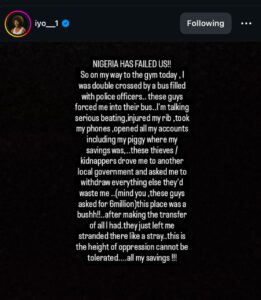
His savings.

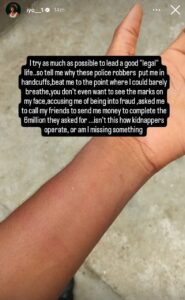
Not roadside “settlement.” Not bail money. Not “find something for us.” His actual accounts. His future. His safety net. Gone. Allegedly taken by people wearing uniforms that are supposed to mean protection.
Because let’s be honest, many Nigerians have experienced or witnessed extortion. But the idea that officers can allegedly go as far as accessing your bank accounts and carting away your savings? That’s terrifying. It changes the question from “how much do you have on you?” to “what happens if they get your phone?”
And that’s why Iyo_1’s case is triggering people so badly.
Adekunle Olopade spoke up and confirmed what we already knew: police harassment and extortion are real and rampant. Iyo_1’s story, however, suggests that once you fall into the wrong hands, nothing is sacred anymore. Not your dignity. Not your body. Not your phone. Not your money.
What makes it worse is that both men had to go public to be heard. Social media has become the emergency line because official channels feel useless. And if people with platforms are allegedly being treated this way, you can only imagine what happens to everyday Nigerians who don’t have followers, screenshots, or public sympathy.
As usual, we’ll probably see statements. Promises of investigation. Maybe an officer or two gets “invited.” Then silence. Until the next person posts their own trauma.
But between Adekunle’s story and Iyo_1’s experience, one thing is clear: this is no longer about a few bad eggs. It’s about a system that has grown too comfortable abusing power, with little to no fear of consequences.
And honestly, that’s the scariest part of all.
Because when law enforcement starts to feel like a bigger threat than actual criminals, you begin to wonder who exactly is protecting who in this country.