

Beyond the gold accessories, designer sunglasses, horses, and striking entrances, the regberegbe groups are people who grow through life together and, in many cases, help carry one another through it too.
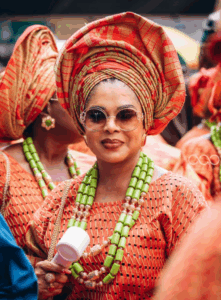

One of the most fascinating aspects of the Ojude Oba festival is the regberegbe tradition. Beyond the colourful outfits, music, and grand processions, the regberegbe system is what gives the festival much of its structure, identity, and cultural depth.
The regberegbe are age-grade associations in Ijebuland, typically made up of people within a three-year age gap. These are voluntary, non-profit groups that play a significant role in the social and cultural development of their communities.
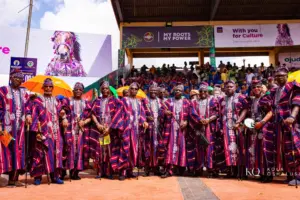

Structured around generational identity rather than family ties, the system brings together people from different walks of life under a shared social bond. Traders, artisans, farmers, hunters, business owners, and professionals all exist within the same age-grade framework, creating a strong sense of collective identity that cuts across profession and background.
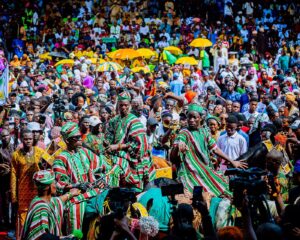

Each regberegbe group has its own name, leadership structure, colours, style, and mode of expression. Members meet regularly, support one another socially and financially, and often contribute to developmental projects within their communities. For many people, belonging to a regberegbe is far more than a social activity; it is a lifelong cultural bond built on loyalty, responsibility, and shared history.
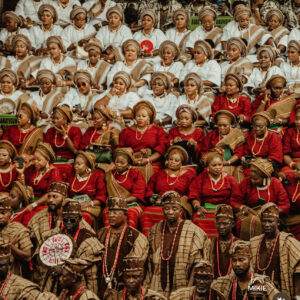

During Ojude Oba, these groups become one of the festival’s biggest highlights. They appear before the Awujale of Ijebuland in carefully coordinated attire, often dressed in matching aso-oke, lace, agbada, and other elegant traditional outfits that reflect both affluence and cultural pride. Their entrances are usually accompanied by music, drumming, dancing, and a level of coordination that immediately captures attention.
Part of what makes the regberegbe presentation so compelling is the healthy competition among the groups. Every year, they attempt to outdo one another through fashion, creativity, organisation, and overall presentation. Some groups spend months preparing their outfits, rehearsing their entrances, and planning every detail of how they will appear at the festival.
But beyond the glamour and social media attention, the regberegbe tradition represents something much deeper. It reflects the communal spirit of the Ijebu people a culture built on respect, honour, loyalty, accountability, and collective progress.
One of the easiest mistakes to make about the regberegbe is assuming they only exist for Ojude Oba. In reality, the festival is simply the most visible expression of something that exists all year round.
Historically, the regberegbe system served as a way of introducing young people to the norms, values, and expectations of society. Over time, it evolved into a broader institution focused on unity, development, and communal advancement. The structure reinforces a strong sense of civic responsibility, where individuals are expected to contribute not only to their families but also to the wider community.
Today, the regberegbe tradition has become one of the biggest reasons why Ojude Oba continues to attract global attention. Images and videos of the groups dominate conversations online after every festival, turning Ojude Oba into one of Nigeria’s most visually celebrated cultural events.
In many ways, the regberegbe are the heartbeat of Ojude Oba. Without them, the festival would lose much of the colour, elegance, brotherhood, and cultural storytelling that make it unforgettable.