

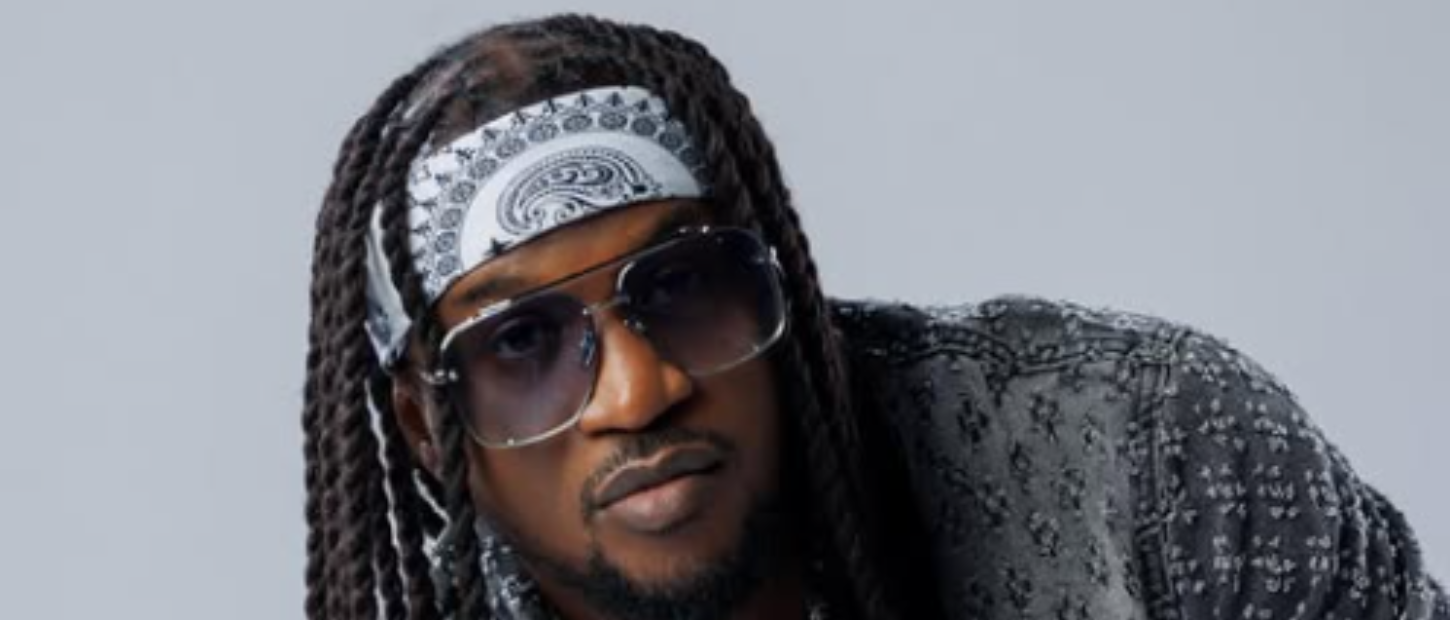
Nigerian music star Rudeboy has responded strongly to a social media user who labeled him a “useless and empty millionaire” and accused him of being indifferent to the state of Nigeria.
The exchange, which played out on X, quickly gained traction after the user questioned the singer’s relevance and contribution to national issues despite his wealth and fame. The comment struck a nerve, prompting Rudeboy to clap back in a tone that made it clear he wasn’t letting the accusation slide.
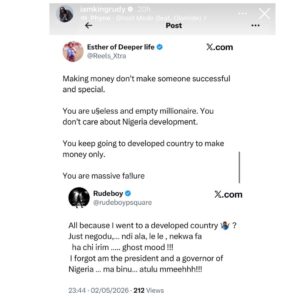
In his response, the singer pushed back against the narrative that celebrities owe the public constant activism or financial intervention, suggesting that critics often overlook the private efforts many public figures make behind the scenes. He also appeared to call out the tendency for social media users to reduce successful individuals to their bank accounts while ignoring their humanity and personal choices.
The incident has since sparked a wider conversation online, with fans and observers split down the middle. Some sided with Rudeboy, arguing that celebrities should not be pressured into solving systemic issues or publicly proving their contributions. Others, however, maintained that influential figures have a responsibility to use their platforms and resources to advocate for change, especially in a country facing ongoing economic and social challenges.
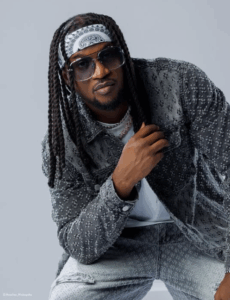
This isn’t the first time a Nigerian celebrity has faced scrutiny over perceived silence on national matters, and it highlights the growing expectation placed on public figures to go beyond entertainment and engage in social discourse.
As reactions continue to pour in, the situation underscores a familiar tension in the digital age: where does personal responsibility end and public expectation begin for those in the spotlight?
