
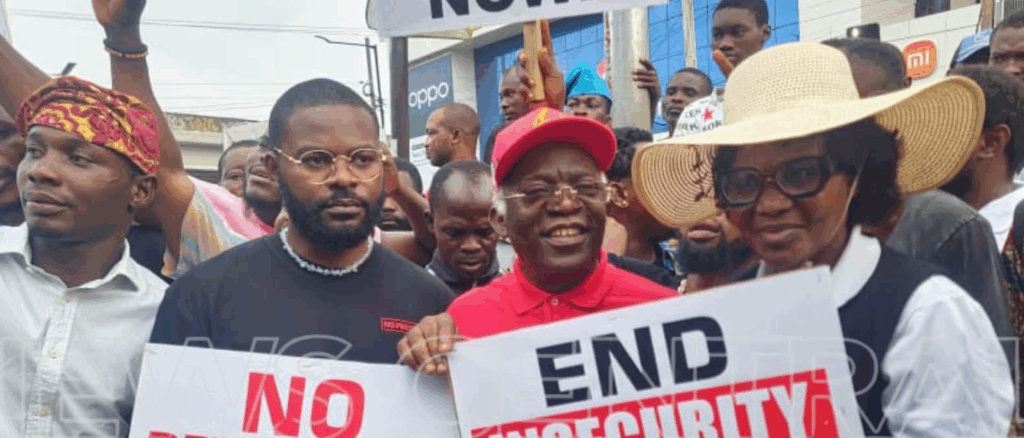
On June 12, 2026 Nigeria’s Democracy Day Falz joined protesters in Lagos streets to protest against the twin evils of rampant insecurity and crushing economic hardship. Citizens marched under the unstable weather, led by civil society groups, labour unions, and figures like human rights lawyer Femi Falana (SAN), Falz’s father.
The date carries deep irony. Nigerians honour the historic struggle for democracy the June 12, 1993 election annulment and the sacrifices of heroes like MKO Abiola yet they flood the streets today to protest the failures of the very democratic system they fought to install.
Instead of celebrations, frustration boils over.
Protesters highlight daily kidnappings, killings, and economic pain that make daily life feel unbearable. Falz, marching alongside his father, did not mince words. He pointed to ongoing school abductions in Oyo State and other regions, slamming the government’s selective urgency: swift action for the connected, indifference for ordinary citizens. “They don’t care about us,” he declared, echoing the anger many Nigerians feel.
Falz: A Consistent Voice Against Bad Governance
This protest fits seamlessly into Falz’s long record of bold activism. The artist, born Folarin Falana, has never shied away from using his platform to confront Nigeria’s systemic failures. In 2018, he released the powerful track “This Is Nigeria”, a hard-hitting adaptation of Childish Gambino’s “This Is America”. The song and video spotlighted police brutality, corruption, herdsmen violence, codeine abuse, and the daily struggles of ordinary people. It went viral, sparking conversations and cementing Falz as a musician who refuses to stay silent for clout or cash.
In 2020, Falz actively supported the #EndSARS protests against police brutality. He joined demonstrations and later honoured victims of the Lekki Toll Gate incident. His father’s human rights legacy clearly influences him, but Falz has built his own reputation through music and direct action that consistently calls out governance failures; from toll gate massacres to electoral irregularities and resource mismanagement.
In an industry often criticised for escapism and materialism, Falz stands out as a patriot who wields both bars and presence on the streets.
The Lingering Shadow of 20.10.20
When the topic of protest comes up, many Nigerians approach it with understandable fear. The memory of October 20, 2020, still haunts the citizens. At the Lekki Toll Gate, soldiers opened fire on peaceful, unarmed #EndSARS protesters waving flags and singing the national anthem. The event, widely labelled a massacre, exposed the state’s willingness to meet dissent with lethal force.
Yet here we are again in 2026 with the same grievances, similar risks, renewed resolve. Protesters in Lagos, Abuja, and elsewhere chant for change despite the uncertainty of what the government might do this time, showing that fear has not fully silenced the demand for accountability.
Will the Government Listen This Time?
The big question remains: Will this make any difference? Past protests have delivered limited results. Today’s demonstrations coincide with President Tinubu’s Democracy Day address, where he acknowledged security challenges while touting reforms. However, protesters see little evidence of urgent action on the ground; schools stay open amid abduction risks, families mourn daily, and economic policies continue to bite hard.
Falz and fellow demonstrators place hope in the democratic process. Nigerians need concrete results: rescued hostages returned safely, improved security infrastructure, and policies that prioritise ordinary lives over elite connections.
As citizens march and speak truth to power, one thing becomes clear: Nigerians refuse to normalise the unacceptable.
On this Democracy Day, the message rings loud; true democracy demands security, equity, and leaders who actually care. The streets have spoken. The ball now sits firmly in the government’s court. Failure to act will only fuel more protests, more frustration, and deeper irony on future June 12s.