
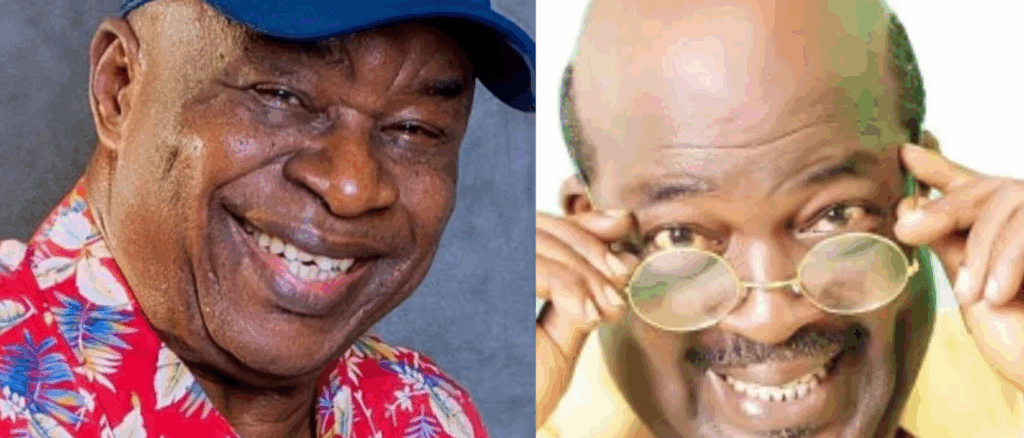
The conversation around Abiodun Ayoyinka and his reported financial struggles has quickly evolved from sympathy to scrutiny, especially following the response from Wale Adenuga.
It began with Ayoyinka’s candid interview, where he revealed that despite playing the iconic Papa Ajasco character for decades on Papa Ajasco, he earns ₦45,000 per episode and only appears in about 13 episodes yearly. He also shared that since retiring from his civil service role with the Lagos State Council for Arts and Culture, life has not been financially stable, adding that he does not own a car or a house.
For many Nigerians who grew up watching the show, the revelation was jarring. Here was a familiar face, one tied to childhood memories and national pop culture, now describing a reality that didn’t match the perceived success of the brand he helped sustain.
But Adenuga’s response introduced a different perspective, one that complicates the narrative.
While maintaining that he has a cordial relationship with Ayoyinka and acknowledging his importance to the Papa Ajasco franchise, Adenuga firmly rejected any claims of exploitation. Instead, he questioned the framing of the actor’s financial situation, pointing to Ayoyinka’s over three decades in public service and asking what became of his earnings, gratuities, and retirement benefits.
He also countered specific claims, stating that Ayoyinka had previously been supported with a car, like some of his colleagues, and had used multiple vehicles over time. He added that, to his knowledge, the actor owns a house in Ogun State.
On the issue of branding, Adenuga reiterated that “Papa Ajasco” is a protected intellectual property. While Ayoyinka is free to pursue personal opportunities, he cannot commercially use the character without approval from the production company. This, according to Adenuga, is standard practice aimed at preserving the integrity of the brand.
He further clarified the production structure, noting that the show is typically shot within a short period each year, about six weeks, with episodes spread across the calendar. In his view, this schedule allows actors time to explore other income streams outside the show.
At its core, this is no longer just a back-and-forth between an actor and a producer. It has become a reflection of a larger issue within the Nigerian entertainment industry.
On one hand, Ayoyinka’s story resonates with many creatives who have experienced inconsistent earnings and lack of long-term financial security despite years of visibility. On the other hand, Adenuga’s response highlights the often overlooked reality that visibility does not always equal financial management, and that opportunities outside a primary platform matter.
The truth likely sits somewhere in between.
What this situation exposes is a structural gap. Veteran actors can be widely recognized yet financially vulnerable, especially when systems for royalties, residuals, or long-term compensation are not firmly established. At the same time, production companies operate within defined business models that may not always align with public expectations of wealth tied to fame.
In the end, the Papa Ajasco conversation is less about who is right or wrong and more about what needs to change.
Because beyond the nostalgia and headlines, it raises a pressing question.
What does sustainability really look like for the people who built Nigeria’s most beloved screen moments?